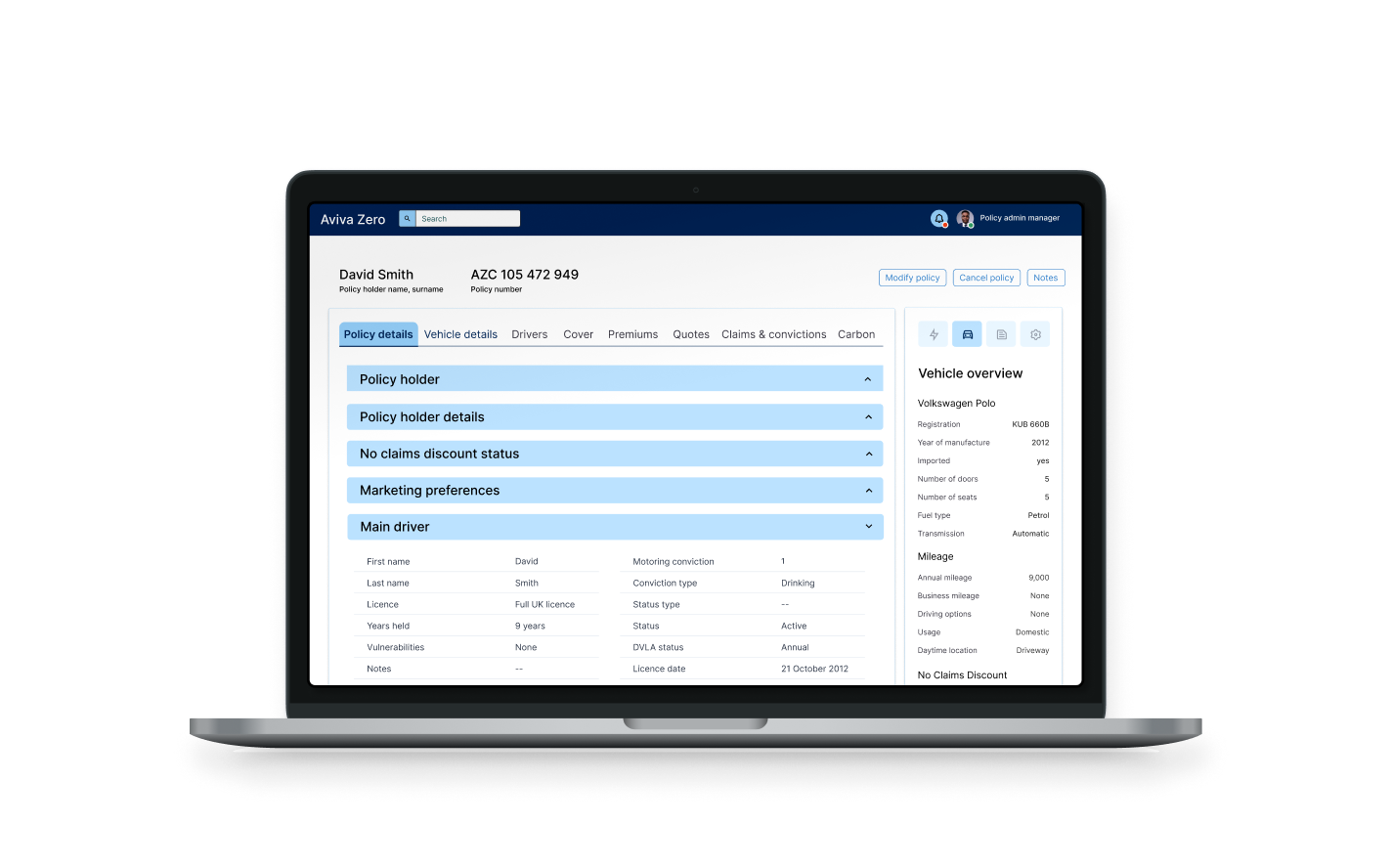
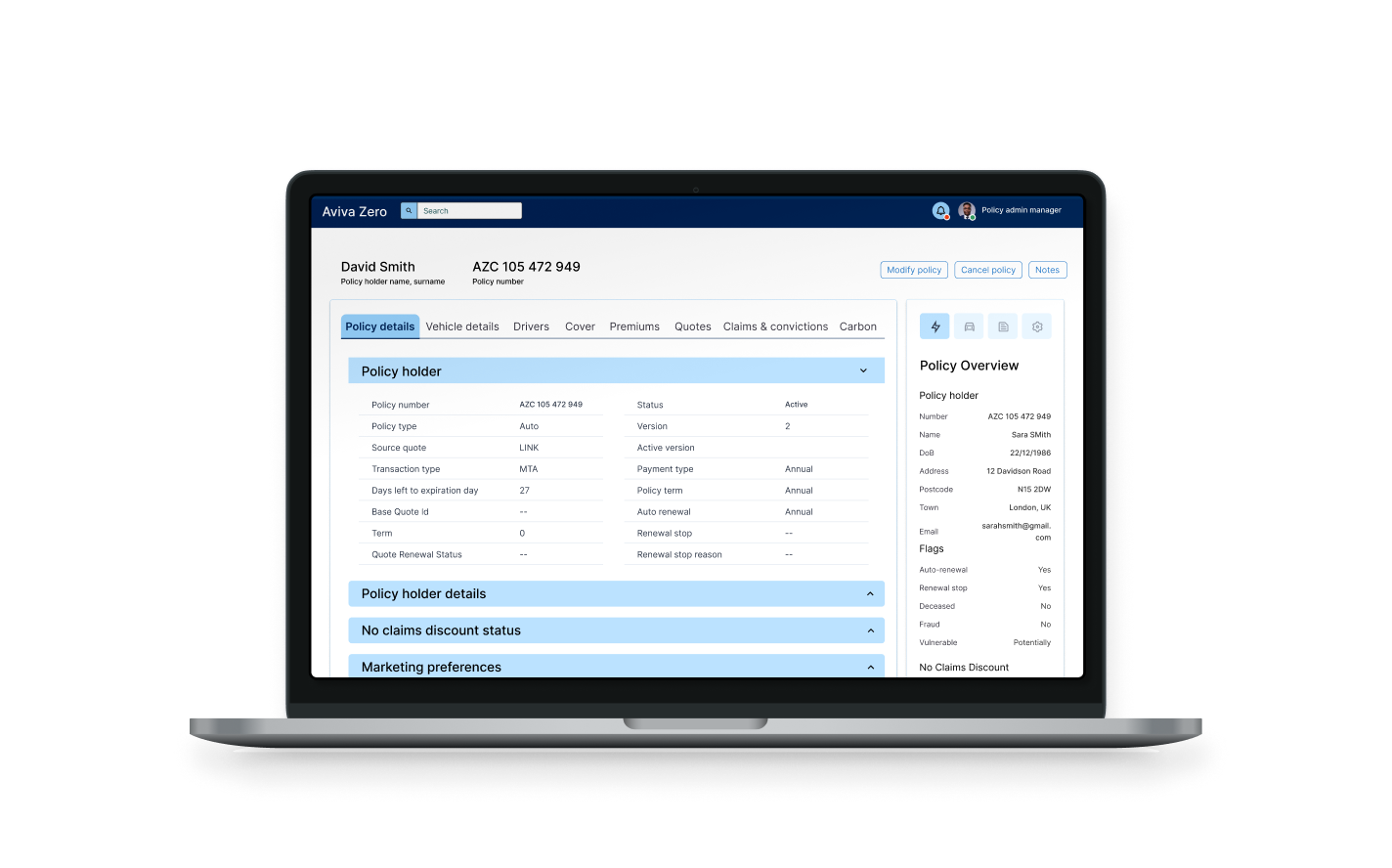
Aviva's internal policy admin system was slowing teams down — increasing operational costs and making everyday tasks unnecessarily complex. I led and managed the redesign of a core admin dashboard to simplify workflows, improve speed, and reduce cost at scale.
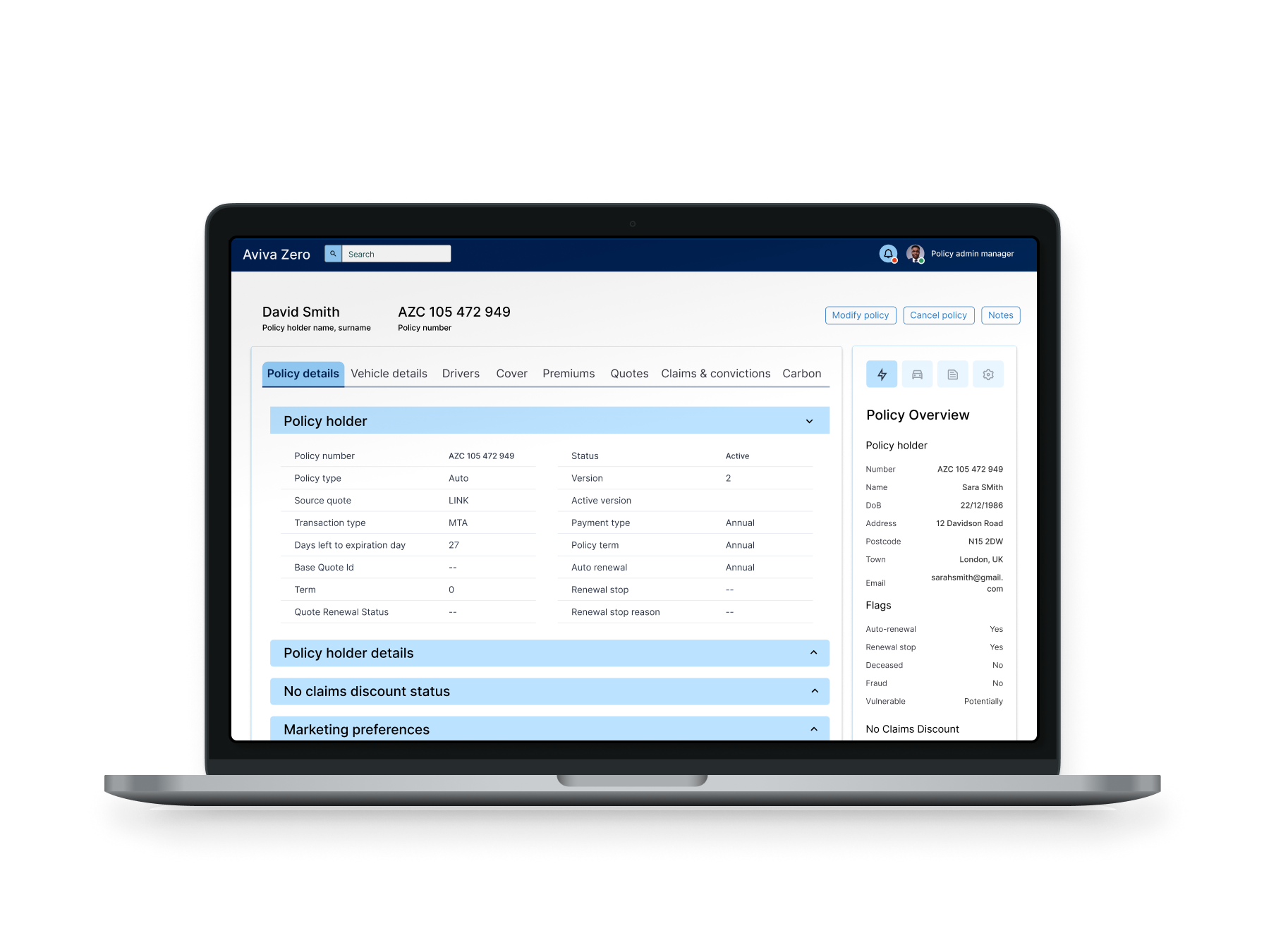
The workflow was long and repetitive, with unnecessary steps limiting productivity to just one policy update per hour.
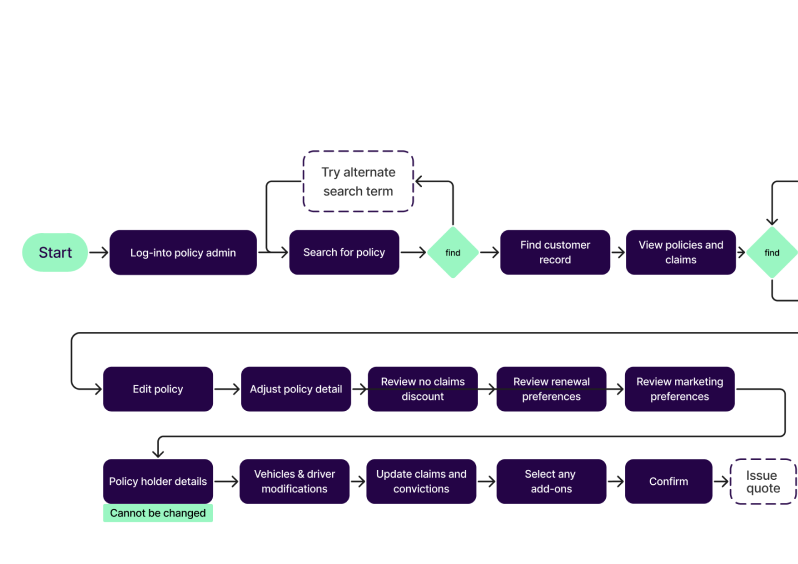
Policy admin managers needed 13 steps to complete a single core task.
Redesigned UX reduced steps by 66%, enabling faster task completion and improved service efficiency.
Streamlined workflows cut operational effort and costs across high-frequency policy tasks.
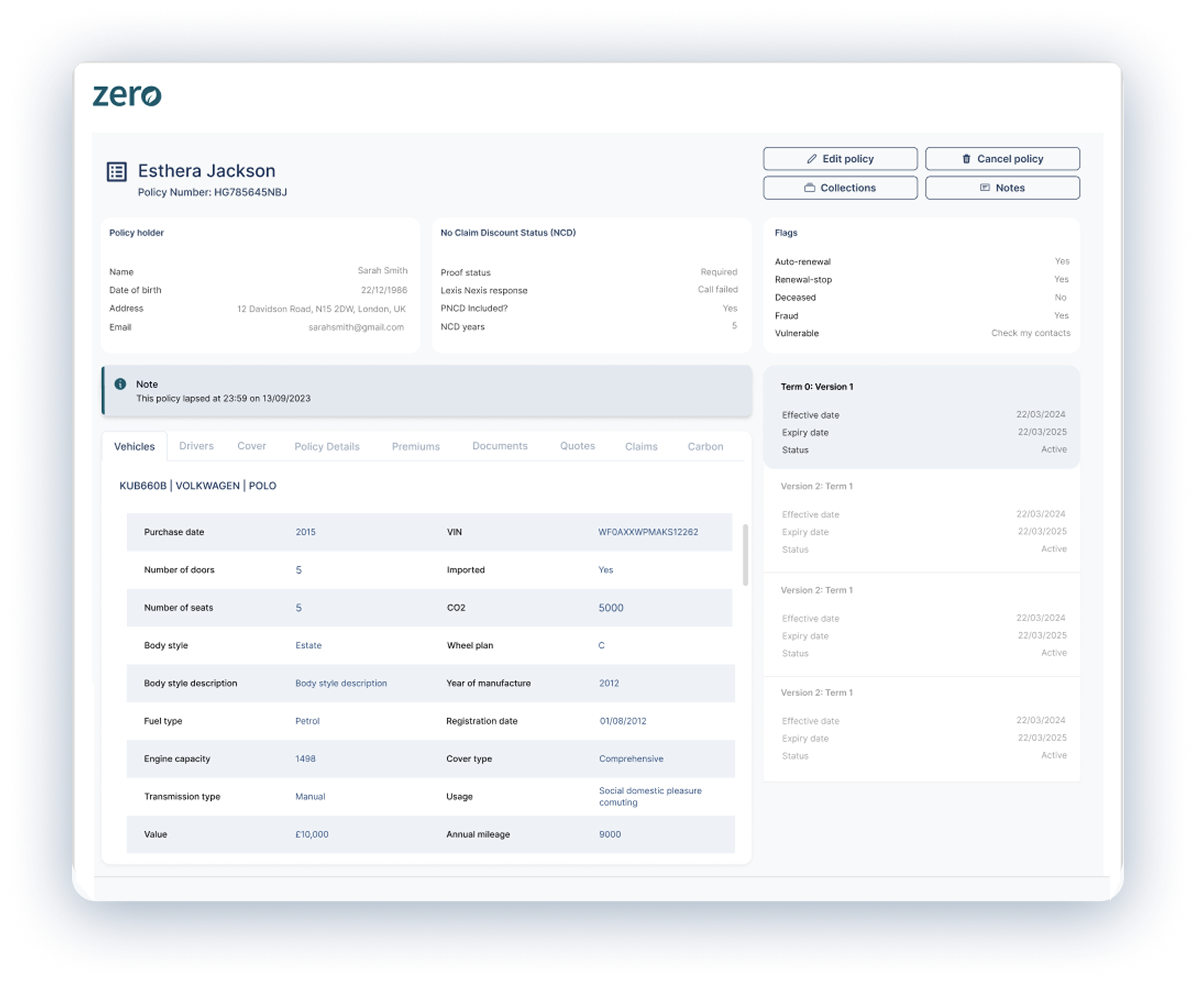
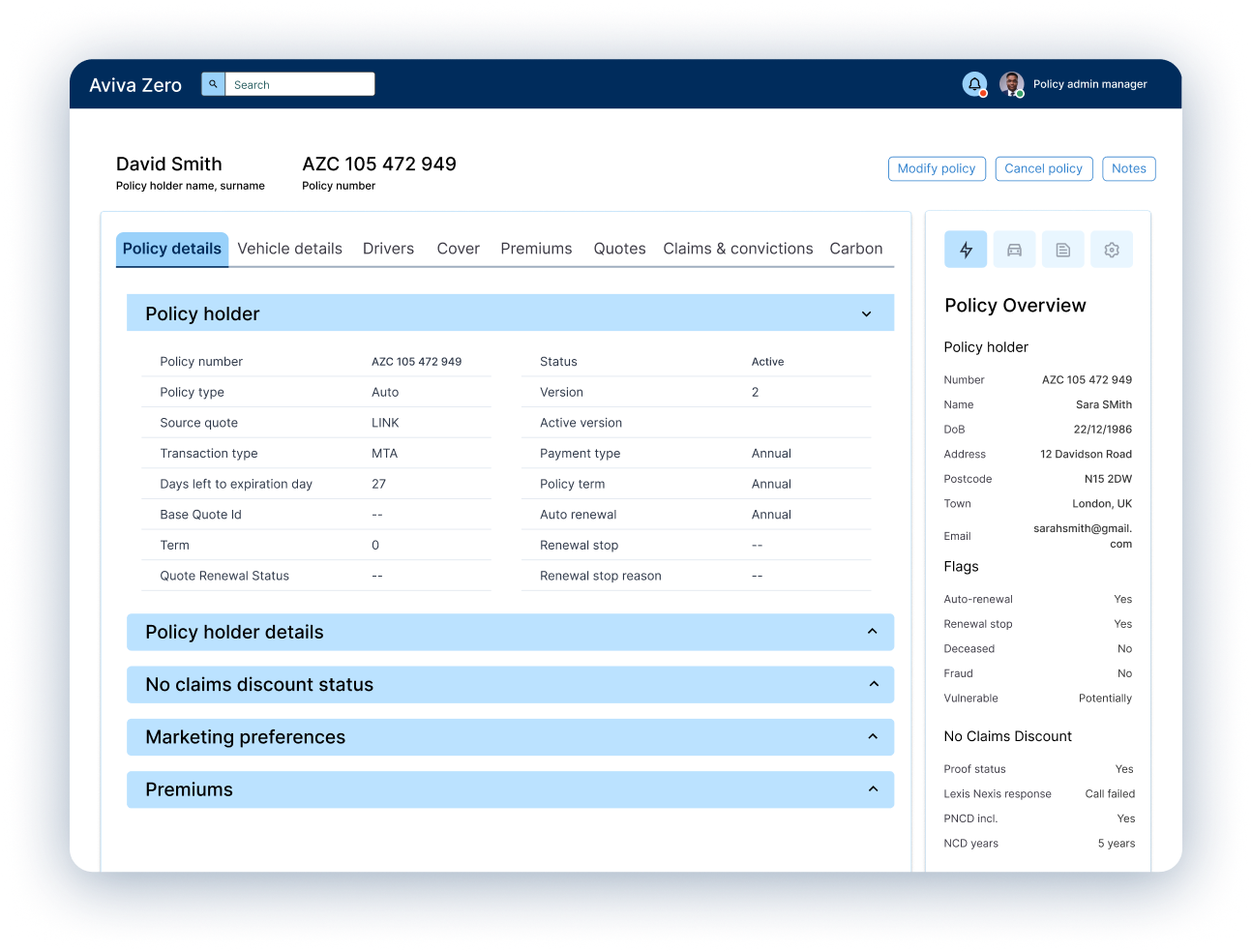
The original interface had grown organically — with little concern for UX efficiency
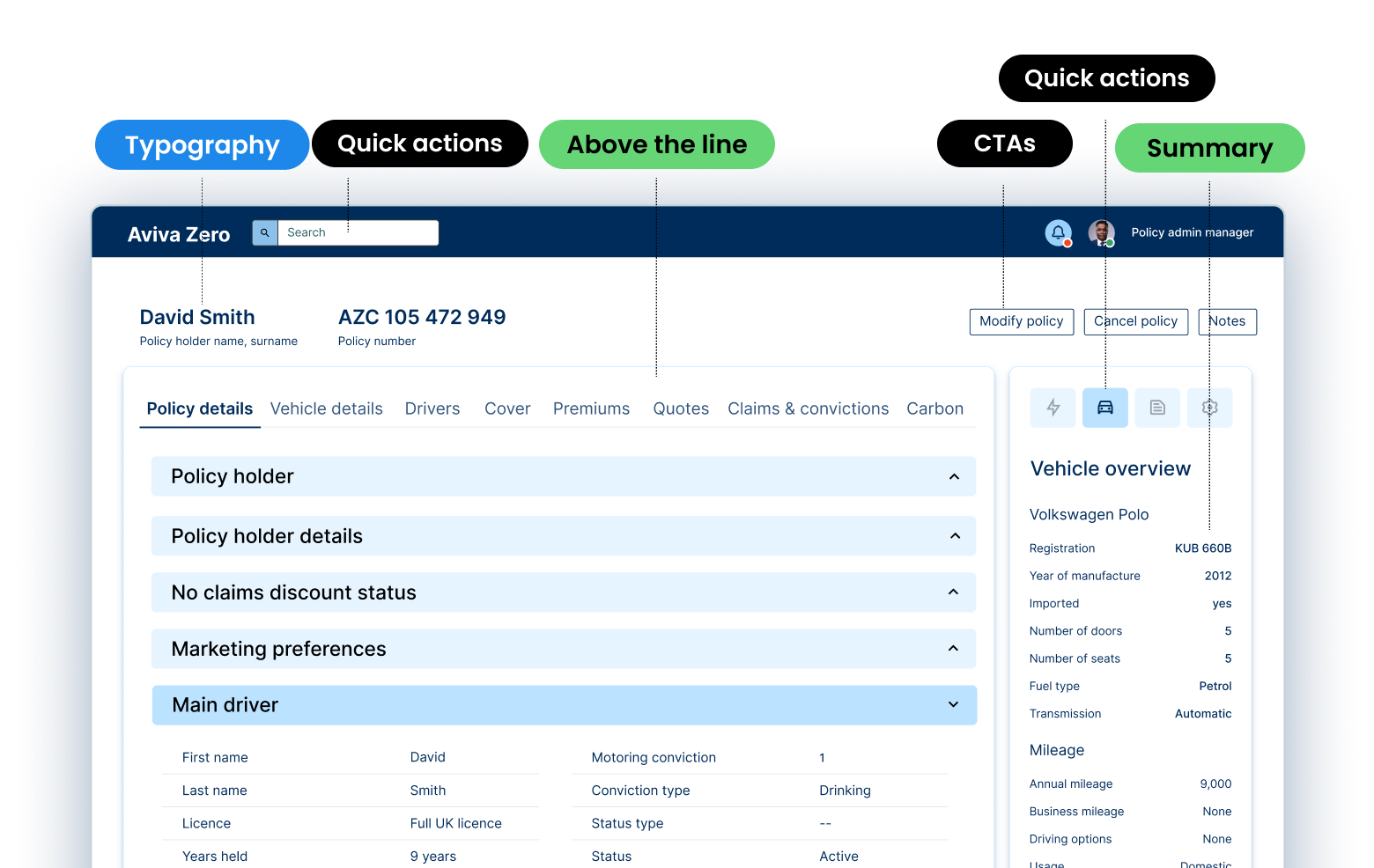
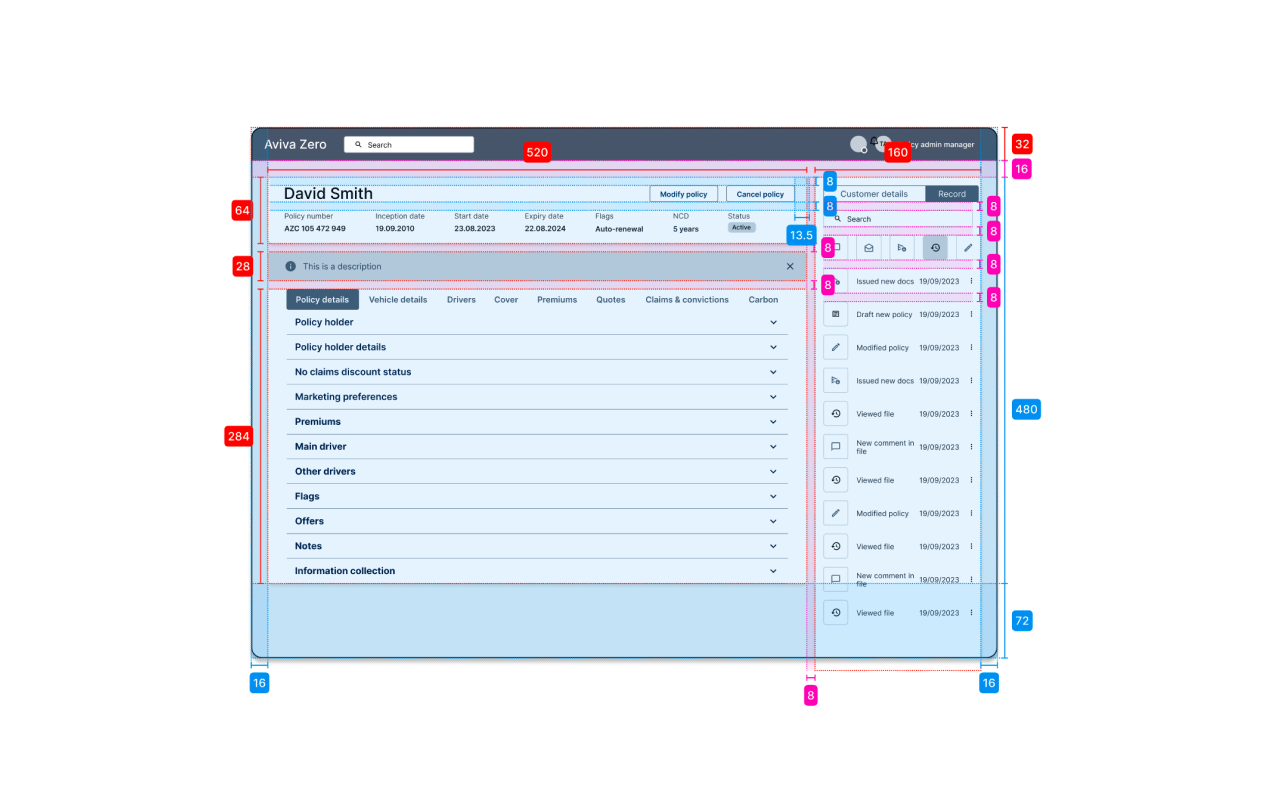
The new interface provided clear hierarchy, consistent grid, decision-driven layout
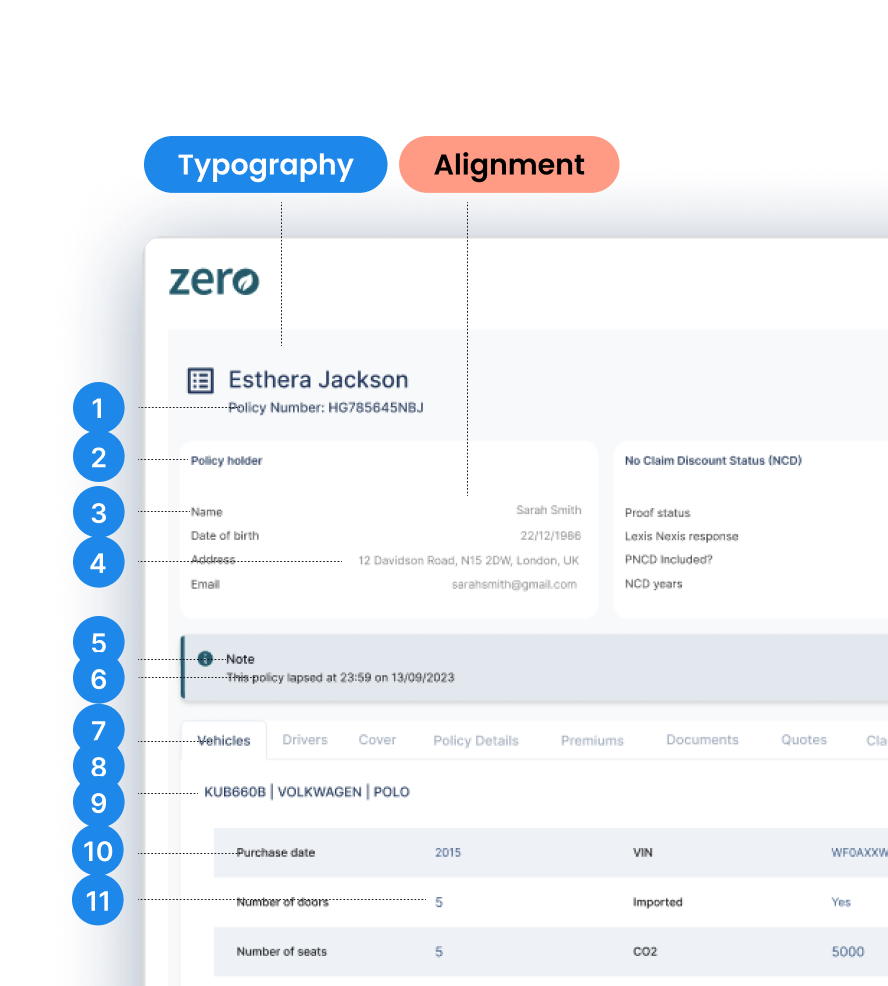
11 different type treatments, alignment and spacing issues added significant cognitive load
With consistent typography and spacing, a cleaner layout accelerated interactions
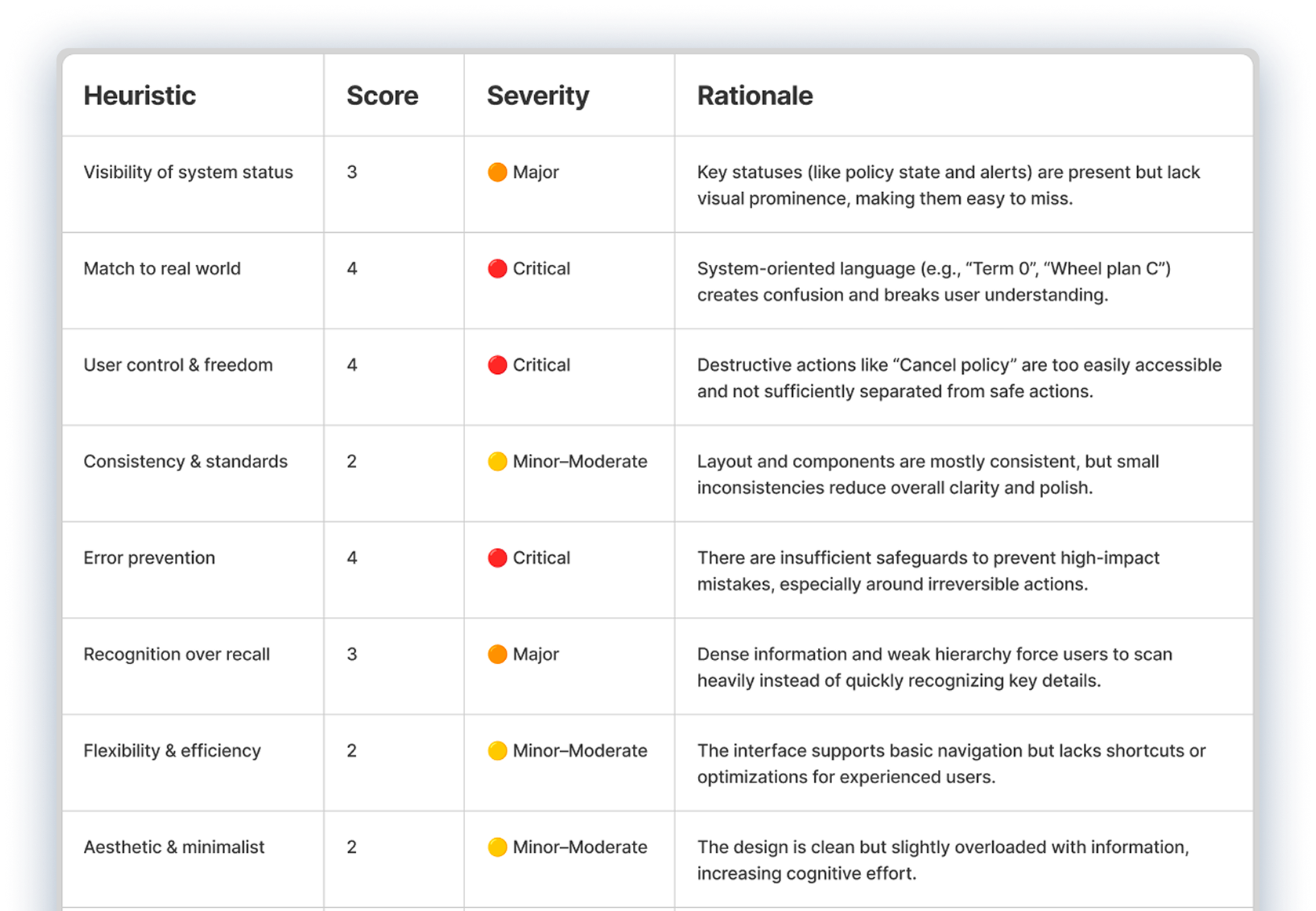
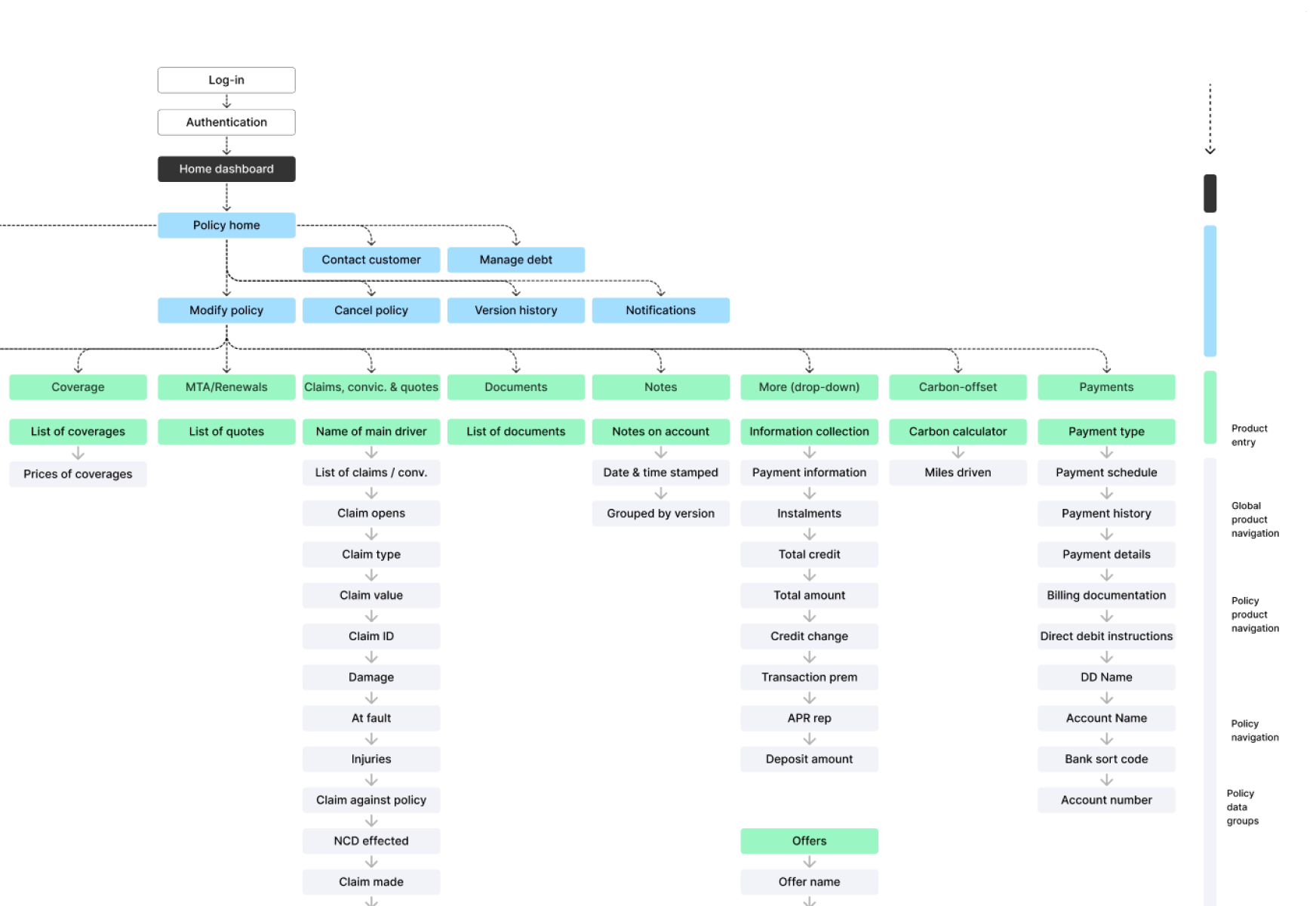
We started with a heuristic analysis to baseline the experience. What we found wasn't just poor UI — it was systemic complexity embedded in the product.
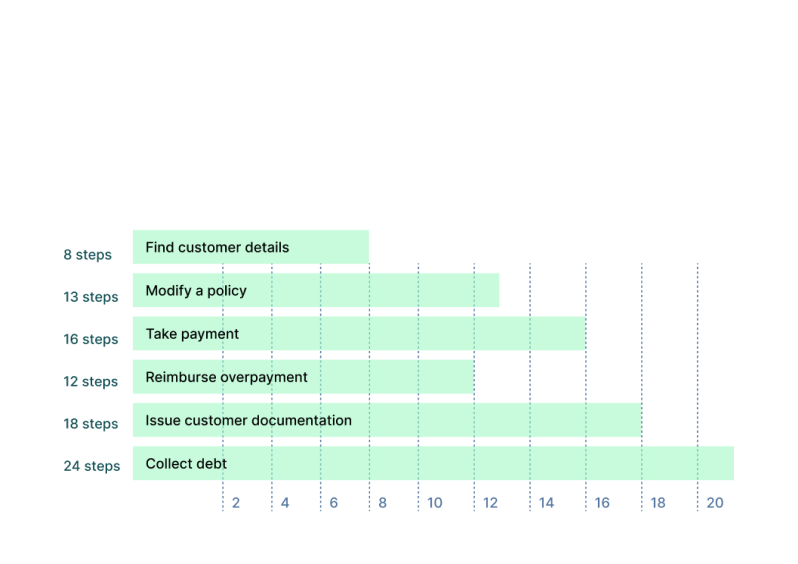
13 steps to modify a single policy. Observational research showed the most common task took well over an hour, in part due to the convoluted workflow in the existing tool.
Most common workflows required 10+ steps. A simple retrieval of customer information took 8 steps of user interactions.
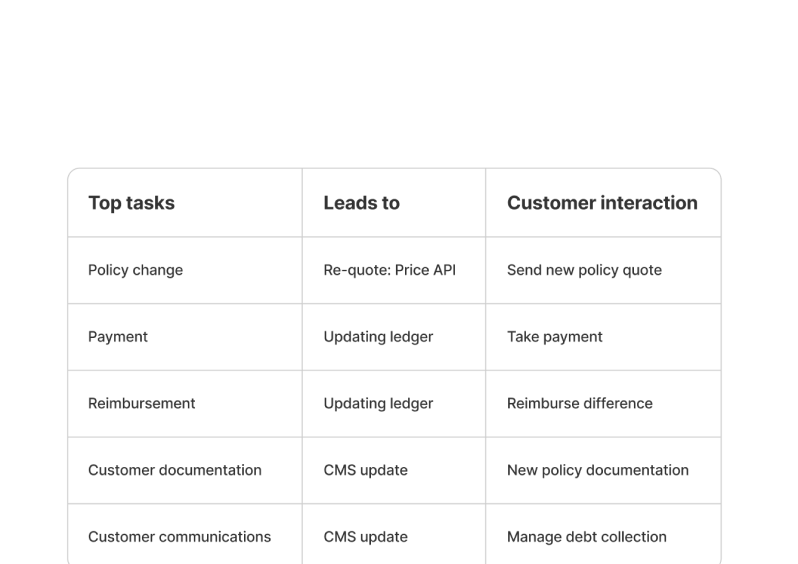
All top tasks in the existing tool led to policy document updates, meaning finding a customer record was usually followed by updating policy details.
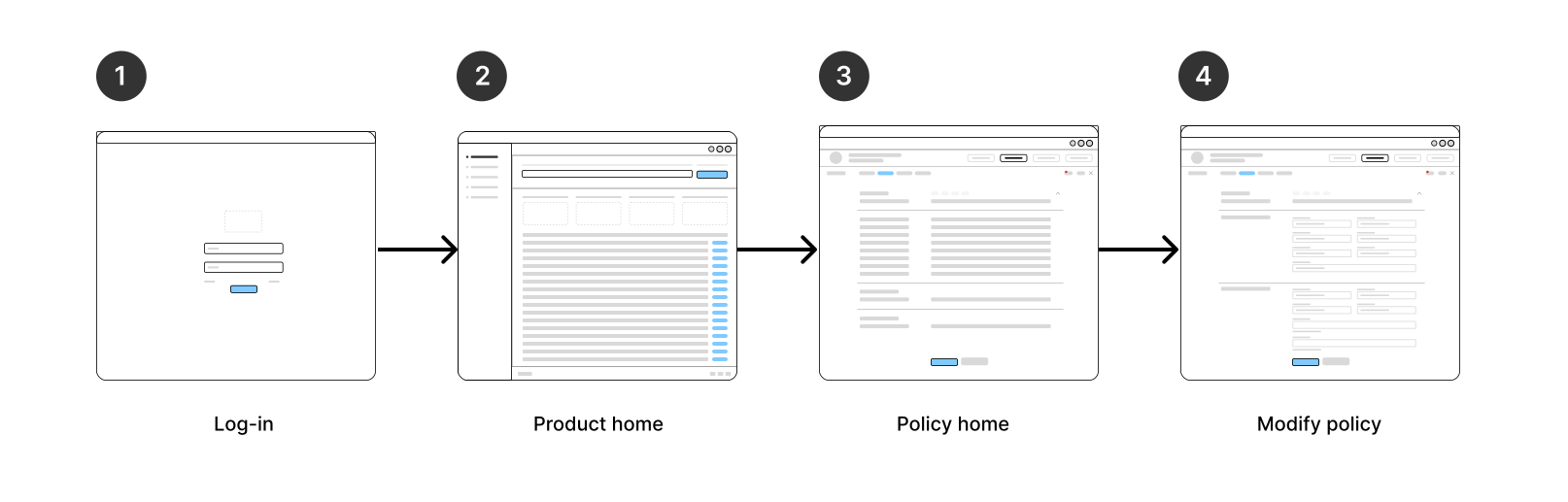
I reframed the experience around Jobs-to-be-Done, focusing on the primary task: → Modify a customer policy quickly and accurately
From there, I:
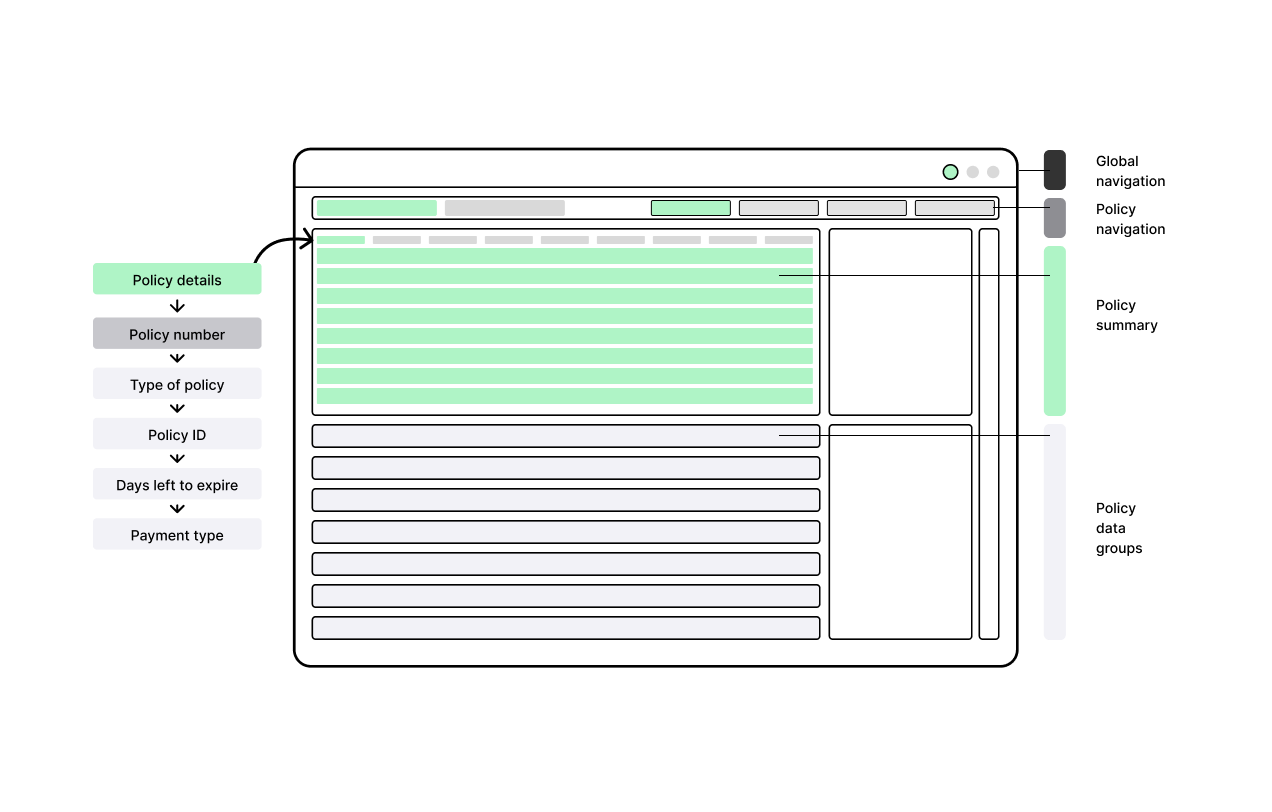
This led to a new information architecture that:
A quick wireframe study showed we could group relevant information and complete the main job-to-be-done of modifying a policy in fewer steps.
Data groupings were tested in various arrangements to optimise shortcuts and layout. Spacing and page rhythm between the information grouping accelerated time-to-task.
The new UI was implemented within 8 weeks of the study conclusion. The new UX saved Aviva hundreds of thousands of operational costs.
Enterprise UX problems are rarely interface problems — they are workflow and system problems. By redesigning the task architecture, not just the UI, we unlocked a 66% reduction in operational cost.
Real impact came from questioning why 13 steps existed in the first place — removing unnecessary steps and aligning the product to how people actually work, not how the system was originally built.
Always open to conversations about product, design, and leadership.
Get in touch